

You Can’t Not Use It.
The only way to have a future where humans aren’t harmed by AI is to engineer it that way — and to engineer it, we must first understand it.


The Real Costs of an Inevitable Future
Every time an AI model trains, somewhere a data center hums louder. The temperature in that warehouse-sized building rises by a degree. More water is pumped in to cool the servers. More electricity is pulled from the grid. More carbon is released into the air we all breathe.
AI may be digital — but it is not immaterial. Its footprint is physical, measurable, and growing by the day.
We talk about AI as code, models, algorithms. But behind every “digital miracle” is a network of labor, minerals, and megawatts. The cloud isn’t in the sky. It’s on the ground — in sprawling data centers wired into the heart of our planet.
The Power Behind the Power
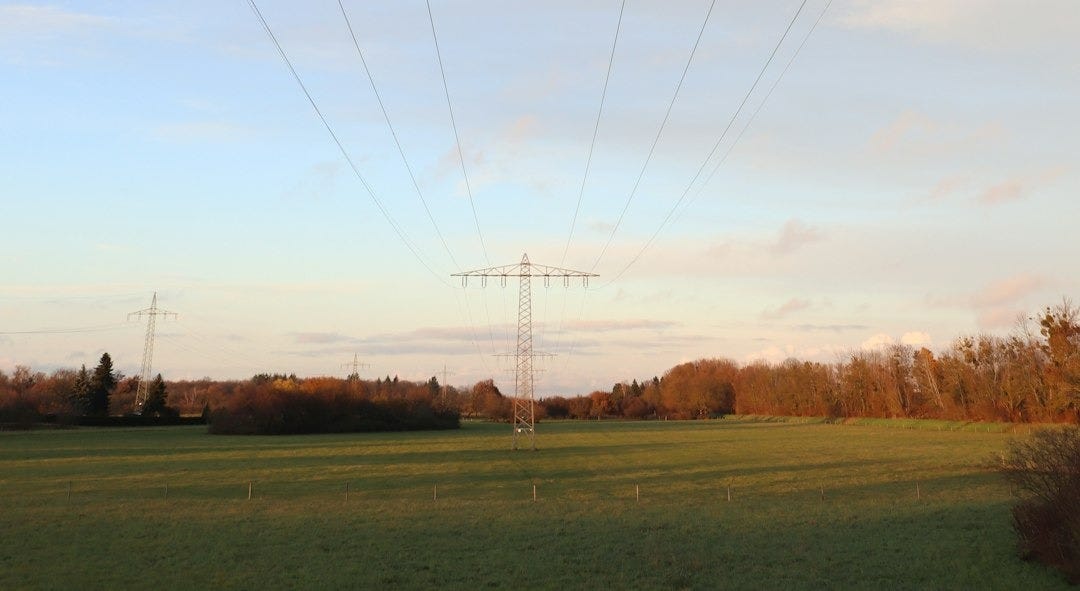
Every great technological revolution has its energy source. Steam fueled industry. Oil fueled mobility. And now, electricity fuels intelligence.
The global race for artificial intelligence isn’t just a contest of ideas — it’s a competition for power. Real, literal power. Countries are scrambling for access to chips, cobalt, lithium, and rare earths. Tech companies are in bidding wars for energy contracts large enough to keep their models running 24/7.
As AI expands, data centers are projected to consume as much power as entire nations. The invisible world of prompts and predictions is draining visible resources: water, land, and labor.
“The future of intelligence,” I sometimes remind people, “runs on power — in every sense of the word.”
This is the new power politics. Not just who builds the smartest machine, but who controls the infrastructure that keeps it alive.

The Point of No Return
There will be no great slowdown in AI. Not because we can’t, but because we won’t.
Technology doesn’t regress. It compounds. The train has already left the station — not on the tracks of speculation, but of inevitability.
To imagine that we can stop AI is to misunderstand what technology is. Tech evolves because humans evolve. Curiosity is our default setting. We build because we imagine. And once something can be built, someone, somewhere, will build it.
That’s the paradox of progress: it can’t be undone, only directed.
So, we face a new question — not whether AI will continue, but how we will continue with it.
You Can’t Not Use AI
For individuals, organizations, and nations, opting out is no longer a realistic option. Refusing AI is like refusing electricity — possible in theory, impossible in practice.
Already, AI shapes what we see, what we know, and what we choose. It filters our information, recommends our decisions, and increasingly manages our work. Even when you think you’re not using AI, you are — through the systems and services that have quietly woven it into everyday life.
The uncomfortable truth is: you can’t not use it. The only question is whether you use it consciously or passively, with intention or by default.
It’s not just a matter of efficiency or innovation anymore. It’s a matter of agency. In a world run on AI, not knowing it leaves you subject to it. The divide of the future won’t be between those who code and those who don’t — but between those who understand how AI works and those who simply live inside its results.
Engineering a Human Future
If AI can’t be paused, it must be designed.
The only way to have a future where humans are not harmed by AI is to engineer it that way — through intentional design, ethical frameworks, and collective understanding. But here’s the catch: you can’t engineer what you don’t understand.
That’s why AI literacy isn’t a luxury. It’s survival.
Knowing AI — what it is, how it learns, what it consumes, and what it risks — is how we ensure that human values are embedded in the systems shaping our world. Every profession, every community, every person needs a basic understanding of the invisible infrastructure now defining our era.
AI literacy is the new civic literacy. It’s not about becoming a programmer. It’s about becoming a participant.
We have a moral and technical obligation to engineer systems that serve human flourishing, not undermine it. That work starts with awareness — and with refusing to outsource understanding.
The Physical Weight of the Digital Future
AI is not magic. It’s machinery. And machinery needs fuel.
The beauty and the danger of this moment lie in the same truth: we are both the creators and the consequences of what we build. Our tools amplify our imagination, but they also mirror our indifference.
If we don’t understand AI, it will reflect our blind spots. If we do, it can reflect our best selves.
This isn’t a call to fear AI. It’s a call to know it. To engage with it as builders, critics, and caretakers. To remember that every algorithm, no matter how advanced, begins with a human choice.

The Spark That Makes Us Human
AI didn’t appear out of nowhere. It came from us — from the same spark that paints, invents, and dreams. The same spark that always asks, “What if?”
That’s what makes us human. And that’s why AI, for all its complexity, is still a reflection of us.
The question isn’t whether we can control it. It’s whether we can remain responsible for what we create.
Because in the end, knowing AI isn’t about understanding machines — it’s about understanding ourselves. The future won’t wait for us to catch up. It’s already here, humming, glowing, pulsing through every circuit and every choice we make.
Stay curious.
Good Reads:
Artificial Intelligence in Daily Life: Views and Experiences
Pew Research Center (April 2025)
Explores how both the public and AI experts perceive their daily interactions with intelligent systems — from social media to healthcare and finance. While 79% of experts say Americans interact with AI multiple times daily, only 27% of the public recognizes it, illustrating how AI’s influence often goes unseen. The study also shows that most people feel they lack control over AI use in their own lives and want more agency in how it’s applied.
Read the full report →
The 2025 AI Index Report
Stanford Institute for Human-Centered Artificial Intelligence (HAI)
A comprehensive, data‑driven report showing how AI has moved beyond research labs into every sector of modern life. It details advances in automation, medicine, and climate modeling, highlighting how AI systems are now infrastructure — with 78% of global organizations relying on them daily. The report also maps AI’s growing energy footprint, regulatory developments, and international investment races, framing AI as both an essential and resource‑intensive force.
2025: The State of Consumer AI
Menlo Ventures (July 2025)
Analyzes how consumer‑facing AI, from recommendation engines to voice assistants, has become invisible but essential infrastructure. It argues that “AI has crossed the utility threshold,” operating like electricity: rarely noticed, yet essential to everything from navigation to creativity.
Read the article →
Everyday AI Tools: A Comprehensive Guide for 2025
SparkCo (October 2025)
A practical overview of how AI is integrated into daily tasks — booking travel, personalized finances, automated scheduling, and more. It illustrates how opting out of AI now requires avoiding entire digital ecosystems.
Read the article →
Artificial Intelligence in 2025: How It Will Shape Business and Everyday Life
EE Times (December 2024)
Looks at AI’s maturation as a social and economic force, transforming supply chains, education, and customer experiences. It reinforces the notion that AI is less a tool and more the environment in which modern life unfolds.
Read the article →